
Let me tell you, the latest update from OpenAI isn’t just cool tech—it’s a game-changer for marketers, creatives, and (brace yourselves) crisis comms teams. OpenAI just introduced native image generation inside GPT‑4o, and it’s a leap forward in making image creation not just beautiful, but genuinely useful.
Unlike earlier models that dabbled in surreal dreamscapes or often bungled basic prompts, GPT‑4o now renders photorealistic images with shockingly accurate detail, nuanced styles, and readable, real-looking text.
Think: whiteboards with messy handwriting, packaging prototypes with legible labels, or characters that remain consistent across design iterations—all generated through conversation.
Here’s what makes this a massive step forward:
- Text accuracy: Finally, AI-generated images can include text that actually looks natural—handwriting, signs, packaging labels, you name it.
- Multi-turn conversation: You can refine your image with each response. Design a product label and keep iterating until it feels just right—no need to start over each time.
- Instruction following: GPT-4o handles complexity like a pro, managing 10–20 distinct objects or visual elements in a single image.
- In-context learning: Upload your own images, and the model can learn from them. Want it to generate a new visual in your brand’s aesthetic? It can.
- Photorealism: From stylish renders to real-world textures, the photorealism here is strong.
An example prompt and the image result from OpenAI:

Previous iterations of GPT-40’s image generation would never have been able to create the content on those street signs. The writing would be a bungled mess of letters and symbols. Now, the signs are legible and accurate.
An example of my prompt and the resulting image:
Create a photorealistic image of a modern workspace with a glass whiteboard covered in colorful handwritten notes about AI marketing strategy. A confident woman in her early 50s with shoulder-length blonde hair, wearing glasses, a fitted blazer and jeans, is standing by the whiteboard mid-sentence, holding a marker. She’s explaining something enthusiastically to an invisible audience. We see words like “prompt engineering” and “prompt sequencing” on the white board. Natural sunlight floods the room through large windows. In the background, books about AI and creativity are stacked on a table next to a coffee mug that says “Human Driven AI.”
Here was the result:

I have to admit, GPT-40’s image generation is very impressive. Notice the words on the whiteboard, the mug and on the books. Previous iterations of GPT-4o would never have that level of accuracy.
OpenAI says they’ve built-in safety measures:
OpenAI says safety has been built into GPT-40’s image generation system. For example, all images will have C2PA metadata tags identifying them as AI-generated images, and OpenAI has policies to block harmful, violent, or sexual content generation.
Still, this technology opens a serious Pandora’s box for brands.
Incredible and realistic images like this will definitely be of use to content creators. But, this can also create real headaches for brands.
We’re Entering the Deepfake Era of Crisis Comms
As powerful as GPT-4o’s image generator is for creatives, it also opens a new front in brand protection—and trust me, your crisis communications plan needs an upgrade.
Let’s get real: If anyone can generate hyper-realistic images using only text instructions, the potential for image-based misinformation skyrockets.
We’re no longer talking about fringe Photoshop manipulations. We’re talking about AI-generated images that look real—images that could:
- Show your product appearing to explode in someone’s hand.
- Depict your CEO attending a fabricated event or standing with unsavory people.
- Generate your product packaging with offensive language or flawed safety labels.
- Fake in-store displays that never existed, with damaging messaging or political ties.
Worse still, these images could spread like wildfire before you even know what’s happening.
This isn’t hypothetical. It’s happening.
With tools like GPT‑4o, anyone—from a disgruntled customer to a coordinated activist group—could create convincing visual narratives that undermine your reputation. The speed and realism of this tech make it extremely difficult for average consumers to spot a fake.
That’s why brands need to treat AI image generation like a critical vulnerability in their crisis planning, just as we’ve treated social media virality or deepfaked videos in recent years.
What You Should Do Right Now
- Update your crisis playbook to include response protocols for AI-generated image disinformation. Train your team to monitor visual platforms, not just text.
- Establish an image verification process internally—educate stakeholders on C2PA metadata and teach your audience how to identify real vs. fake visuals.
- Work with your legal and PR teams to get ahead of potential brand impersonation or image manipulation.
- Use the tech yourself—don’t shy away. Experiment with GPT‑4o to understand how these images are created and how your own assets could be at risk or protected.
If you need assistance with this, contact us. We have decades of crisis comms experience and have transformed that into AI crises playbooks and team trainings, including digital and audio watermarking.
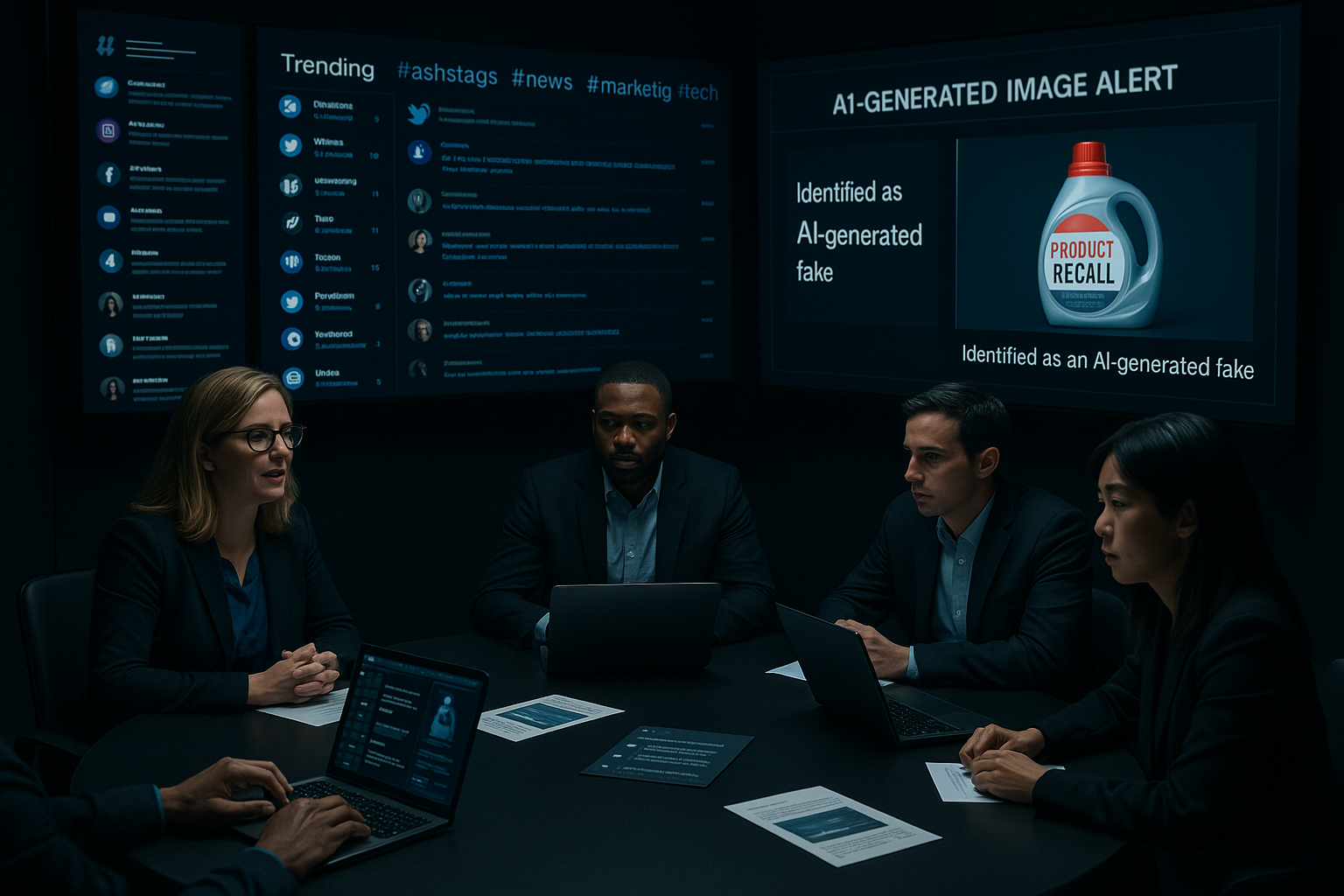
Here is another prompt and result to show you what could potentially be in your brand’s future:
Prompt: A dark, dramatic room lit by large screens showing real-time social media feeds, trending hashtags, and AI-generated image alerts. A diverse group of professionals sits around a circular table, analyzing images and data with serious focus. On one screen, a fake product recall image is being identified as an AI-generated fake. The atmosphere feels like a high-stakes newsroom or cybersecurity command center.

Final Thoughts
GPT‑4o’s image generation is a thrilling step forward for marketers, educators, and designers. But it’s also a flashing red light for brand guardians. ChatGPT-4o’s image generator gives us superpowers—but it also arms the public with an entirely new way to manipulate perception.
Welcome to a new era of creativity—and crisis. Let’s be smart about how we walk through it.
Remember, AI won’t take your job. Someone who knows how to use AI will. Upskilling your team today, ensures success tomorrow. In-person and virtual training workshops are available. Or, schedule a session for a comprehensive AI Transformation strategic roadmap to ensure your marketing team utilizes the right AI tech stack for your needs.

AI Governance Is Becoming a Reputation Issue. Where Are Communications Leaders?
AI governance shapes more than compliance. Katherine Morales, APR explains why communications leaders must help protect trust, credibility and reputation.


Stop Building AI Agents Until You Understand the Work
Everyone wants an AI agent. But automating a workflow you don’t fully understand can simply make a bad process faster. Before organizations deploy agents, they need to determine what should remain human, where AI should assist, what should be automated, and how teams will actually work inside the new system.


65% of Employees Want to Roll Back Workplace AI. The Tech Isn’t the Real Problem.
Employees are adopting AI faster than companies can adapt. Learn why AI change management, workflow redesign, governance and training must come next.