
LinkedIn recently reported a statistic that should get the attention of anyone thinking about the future of work: women accounted for just 26% of AI hires in the United States in 2025.
The gap gets even wider at the top. Women hold just 20% of Head of AI roles and only 13% of C-suite AI leadership positions at AI companies globally.
Those numbers matter.
But I think they also raise a bigger question: Are we defining AI talent too narrowly?
Much of the conversation about the AI workforce still centers on the people who build the technology: engineers, data scientists, machine learning specialists and other highly technical roles.
We absolutely need women represented in those professions.
But building AI is only one part of the transformation now underway.
Inside most organizations, another challenge is quickly becoming just as important: determining how AI should actually change the way people work.
And that requires a much broader set of skills.
AI transformation isn’t just a technology problem
As organizations move from experimenting with generative AI to embedding it into everyday operations, they have to make decisions that aren’t fundamentally about technology.
What should AI do?
What should people do?
Which tasks should be automated?
Where can AI accelerate or augment someone’s work?
Where does human judgment need to remain firmly in control?
What happens to an existing workflow when AI agents can perform multiple steps autonomously?
And perhaps most importantly: Who gets to make those decisions?
These aren’t simply engineering questions.
They’re organizational questions.
They require people who understand how a business actually operates: how decisions get made, how customers behave, how teams collaborate, where processes break down, where institutional knowledge lives and where judgment matters.
That expertise often belongs to people who have spent 10, 20 or 30 years working inside functions such as marketing, communications, HR, finance, operations, legal, customer experience and sales.
Many of them may never have considered themselves “AI talent.”
We should reconsider that.
We need women building AI. We also need women designing how AI gets used.
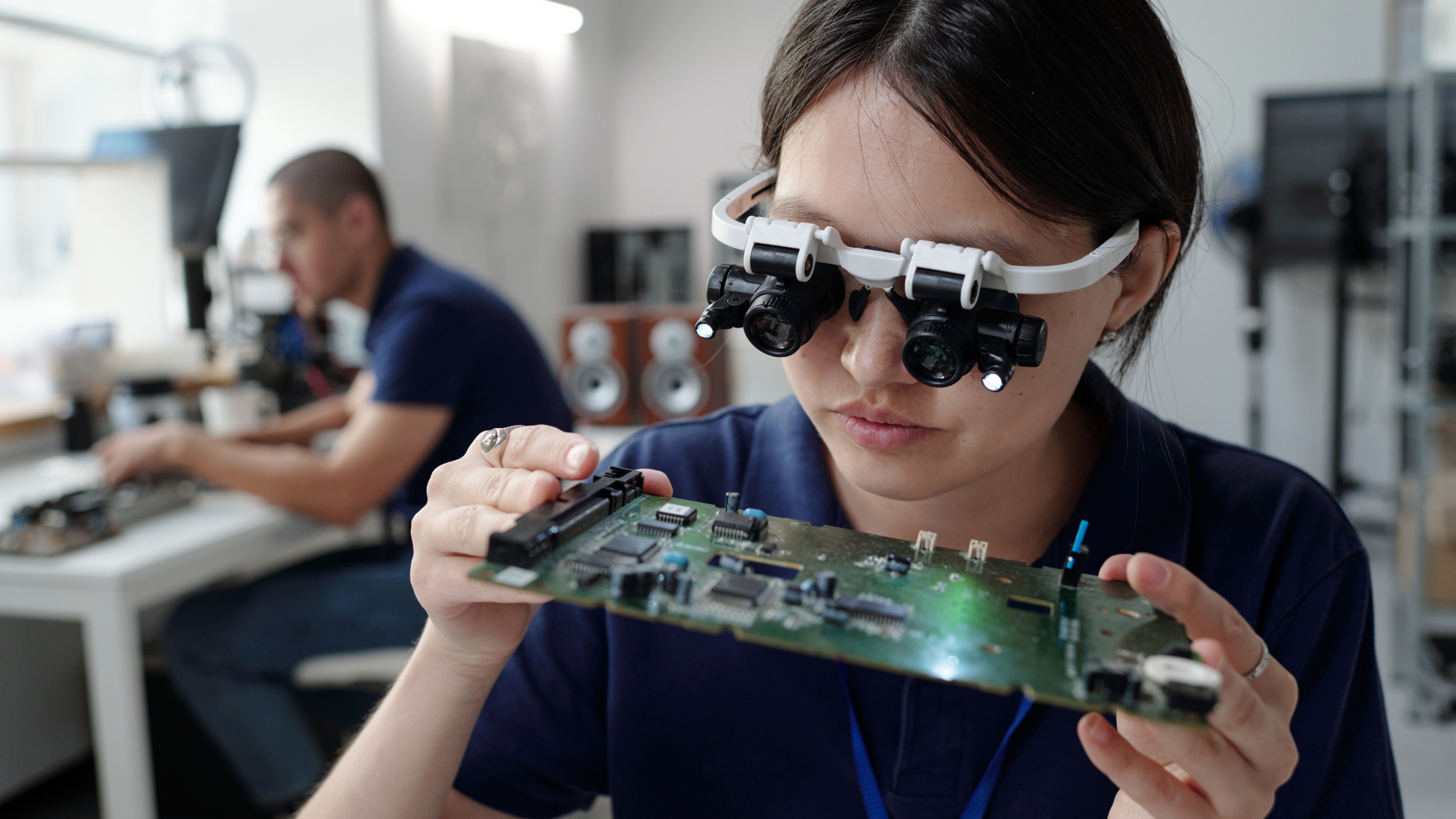
Representation among engineers, developers and technical AI leaders remains critically important. (A telling example of this is in searching Canva for a photo to accompany this post, I used phrases like “women in tech” and “women in AI” and the results I got were mainly women laughing together or having a spa day. When tech was present in the image, it inevitably included a man in the image. You can image the different results for “men in tech.”)
But there is another form of representation that deserves more attention.
Who sits on the AI steering committee?
Who helps redesign the workflow?
Who determines what should and shouldn’t be automated?
Who establishes the governance rules?
Who decides when human review is required?
Who evaluates whether an AI-enabled process is actually better for the people doing the work and the people receiving its output?
These decisions will shape jobs just as surely as the underlying technology will.
If women aren’t adequately represented in those conversations, the problem isn’t simply that women may miss out on high-paying AI careers.
Women may also have less influence over how work itself is redesigned in the AI era.
That’s a much bigger issue.
Domain expertise is becoming AI expertise
One of the most important shifts I believe we’ll see over the next several years is a redefinition of what it means to be an AI professional.
Technical expertise will remain essential.
But so will domain expertise.
An experienced HR leader understands the nuances of hiring, performance management and employee relations that an AI engineer may not.
An experienced marketer understands customers, brand, channels and the realities of moving work through an organization.
A communications professional understands reputation, stakeholder expectations and the consequences of getting language wrong.
An operations leader understands the dependencies and exceptions hidden inside what appears on paper to be a simple process.
AI transformation requires both sides of that equation.
We need people who understand what the technology can do.
And we need people who deeply understand the work the technology is being asked to change.
Increasingly, the most valuable AI teams will bring those people together.
Don’t mistake “not technical” for “not relevant”
There is another reason this distinction matters.
Many experienced professionals, women included, look at the explosion of AI jobs and assume they arrived too late.
They aren’t engineers. They don’t build models. They don’t write code.
So they conclude that the AI economy belongs to someone else.
I think that’s a mistake.
You don’t necessarily need to become a machine learning engineer to become an important AI leader inside your organization.
You need enough AI fluency to understand the capabilities and limitations of the technology.
You need to understand where AI can meaningfully improve the work.
You need the ability to redesign workflows around human and machine strengths.
And you need the judgment to recognize where people still need to lead.
For experienced professionals, years of domain knowledge aren’t baggage from the pre-AI workplace.
They may be one of the most valuable assets we have for building the next one.
The future of AI leadership should be broader
LinkedIn’s research rightly draws attention to the gender gap developing within AI hiring.
We should work to close it.
But we should also make sure we’re looking at the entire picture.
The future of AI won’t be determined only by the people who build models, platforms and agents.
It will also be determined by the people who decide where those technologies belong, how they change workflows, what decisions they should be allowed to make and where human judgment must remain.
Those people are designing the future of work.
Women need to be among them.
And organizations need to start recognizing that AI talent isn’t defined only by someone’s ability to build the technology.
Sometimes it is defined by something equally important:
Understanding the work well enough to know how the technology should change it.
Remember, AI won’t take your job. Someone who knows how to use AI will. Upskilling your team today, ensures success tomorrow. Custom in-person and virtual trainings are available. If you’re looking for something more top-level to jump start your team’s interest in AI, we offer one-hour Lunch-and-Learns. If you’re planning your next company offsite, our half-day workshops are as fun as they are informational. And, of course, we offer AI consulting and GEO strategies. Whatever your needs, we are your partner in AI success.
Read more: The AI Gender Gap May Start With How We Define AI Talent
Claude Cowork Is Changing AI From a Tool to A Teammate
Claude Cowork points to a bigger shift in workplace AI: from asking AI to complete individual tasks to delegating pieces of a workflow. The opportunity isn’t simply faster work. It’s deciding what AI should own, what humans should own and how the two work together.


ChatGPT WORK Begs the Question: What Work Can I Give to AI?
ChatGPT Work represents an important shift in enterprise AI: from asking AI to complete individual tasks to giving it a defined role inside a workflow. For marketing and communications teams, that changes the conversation from better prompting to better work design.

AI Governance Is Becoming a Reputation Issue. Where Are Communications Leaders?
AI governance shapes more than compliance. Katherine Morales, APR explains why communications leaders must help protect trust, credibility and reputation.


Stop Building AI Agents Until You Understand the Work
Everyone wants an AI agent. But automating a workflow you don’t fully understand can simply make a bad process faster. Before organizations deploy agents, they need to determine what should remain human, where AI should assist, what should be automated, and how teams will actually work inside the new system.

65% of Employees Want to Roll Back Workplace AI. The Tech Isn’t the Real Problem.
Employees are adopting AI faster than companies can adapt. Learn why AI change management, workflow redesign, governance and training must come next.

Astra, Fable and the New AI Models Are Changing What Counts as AI Work
GPT-6 Astra and Claude Fable 5.1 are moving AI beyond content generation toward completing complex, multistep workflows.

Your AI Policy Is Just the Beginning. Now, Design How Work Gets Done.
AI governance goes beyond policies. Learn how teams can embed governance into Human + AI workflows through dialogue and intentional decisions.

BREAKING NEWS: NVIDIA to Acquire Hugging Face. What This Means for Marketers
NVIDIA’s acquisition of Hugging Face signals a more open, specialized and complex AI ecosystem. Here is what marketing leaders should understand about model choice, personalization, costs, vendor dependence and governance.

ChatGPT Ads Hit $1 Billion: What It Means for GEO & AI Visibility
ChatGPT Ads have reached a $1 billion annualized run rate. Here’s what the rise of AI advertising means for GEO, brand visibility and the future of digital marketing.

Top 10 Things Your AI Policy Should Include
An effective AI policy should help employees make sound decisions when AI shows up in real work. Here are 10 areas organizations should address—from tools and data to AI agents, transparency, records and human accountability.

Buying AI Technology Is Easy. Changing How People Work Is Harder.
Companies have spent years buying AI tools and teaching employees how to use them. But access isn’t transformation. The next phase of enterprise AI requires redesigning the work itself — turning individual AI experiments into repeatable workflows, shared organizational capability and smarter Human + AI collaboration.

The Emerging AI Data Custody Problem: Why an AI Policy Isn’t Enough
Every time an employee uploads a document, analyzes data or asks AI to improve a draft, organizational information moves into an AI system. The question isn’t simply whether employees can use AI. It’s who has custody of that information, what happens to it next, and whether your governance practices follow the work.

Why Most GEO Strategies Fail: Your Content Isn’t Built for the Conversation
Your company may not need more content. It may need better-connected content. Learn why conversation gaps cause brands to disappear as customers move through the GEO Conversation Chain™.